Wildlife work with the Jane Goodall Institute
Chimpanzee face recognition, plus hands-on work reintroducing mandrills and releasing rescued wildlife.
Software Engineer · Pointe-Noire, Republic of the Congo · May 2024 to August 2025. I also built the geospatial ML pipeline behind the forest elephant corridors project there.
Chimpanzee face recognition
My main project with the Jane Goodall Institute was a face-recognition system for chimpanzees: software that looks at photos or video and tells you which individual chimp is in the frame.
Knowing who is who is the foundation of chimpanzee research and care. Every individual has its own health history, family ties, social rank and behavior, and tracking them over months and years is how researchers and caretakers notice when something changes. Traditionally that depends on experts who have learned to recognize each face by eye, which takes years and doesn’t scale to hours of camera footage. Automatic recognition makes identification faster, repeatable and completely non-invasive: no tags, no collars, no disturbance.
Why it’s a hard problem
- Faces change: chimps age, get injured, and look different from season to season.
- Real-world footage: field video brings shadows, dappled light, motion blur, leaves in the way and faces turned sideways.
- Very similar individuals: family members can look alike, and the model has to separate them anyway.
- Little labelled data: every training image has to be identified by someone who knows the chimps.
Reintroducing mandrills into the wild
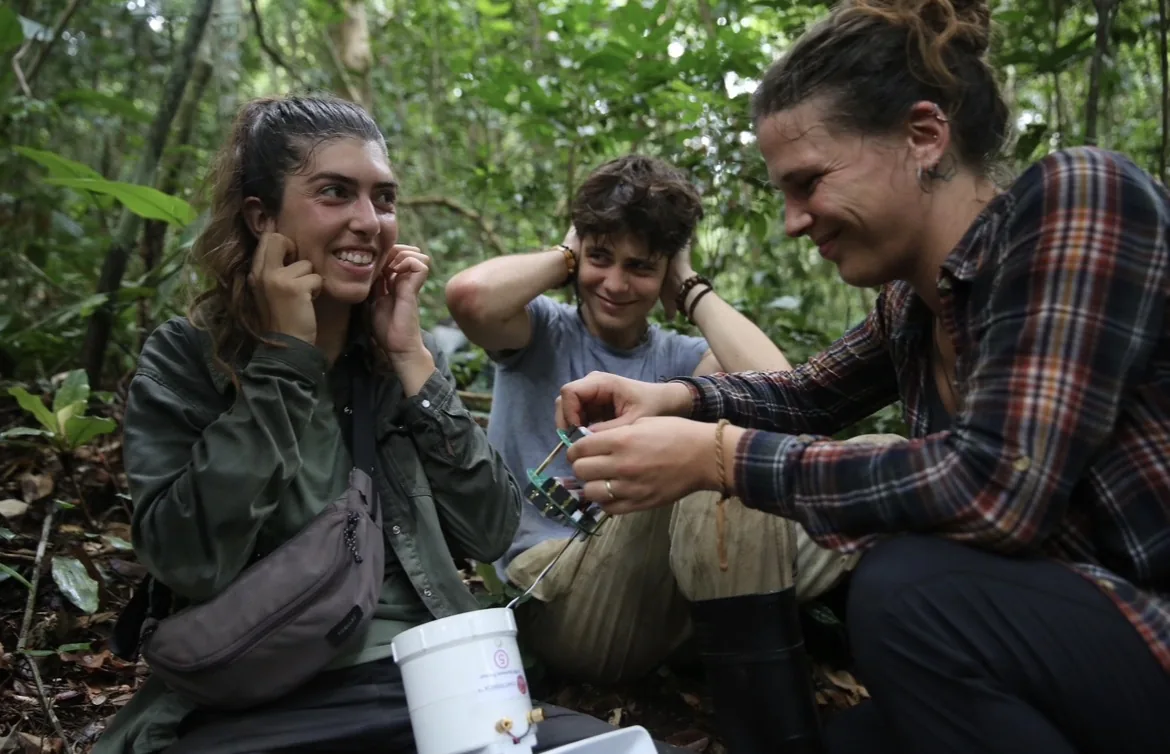
I also took part in work to return mandrills to the wild: helping animals go from care back to living freely in their natural habitat.
Releasing and protecting rescued wildlife
Beyond primates, I helped with the release and protection of other rescued species, including an eagle and a pangolin, one of the most trafficked animals in the world.